Going
beyond the usual concepts of dependency relationships located within a post
-colonial state, this new research project examines in greater depth how In
dian conceptions of the body (depicted in art, iconography and in performan
ce) have been impacted by a moral, religious Western perspective imposed be
fore, during and post-colonial rule. My recent focus on gay male dancer Ram
Gopal, the subject of a recently published monograph (2024), investigates
a fascinating man who worked his way through a complex tangle of critical c
ontemporary problems as a gay Asian male dancer in London and Europe at a t
ime when myriad and relevant cultural shifts were in progress. Tackling iss
ues of gender and coloniality, the book is a critical beginning to the new
research.
The ‘moralising projects of colonial and post-colonial mode rnity’ as Davesh Soneji has termed them remain part of the ‘unfinished past s’ (2012: 3) of both the place and enactment of performative ritual and per formance in India, from the roles of the female temple dancers, the dev adasi, through to the itinerant folk dance and theatrical performers, and the ‘third gender’ or transgender performers – the hirijas and kothis. In these cases, there is what I call a ‘double dependency ’ that emerges firstly from the all-powerful colonial project and secondly, in the India that develops in post-colonial times from the new, fervent na tionalism that reinforces in part, a Victorian morality and disgust for bod ily performance, recreating the dance forms through a prism of purity and r espectability. In complex ways, these systems created cultures of dependenc y where aspects of inclusion and exclusion were normative ways of behaviour .
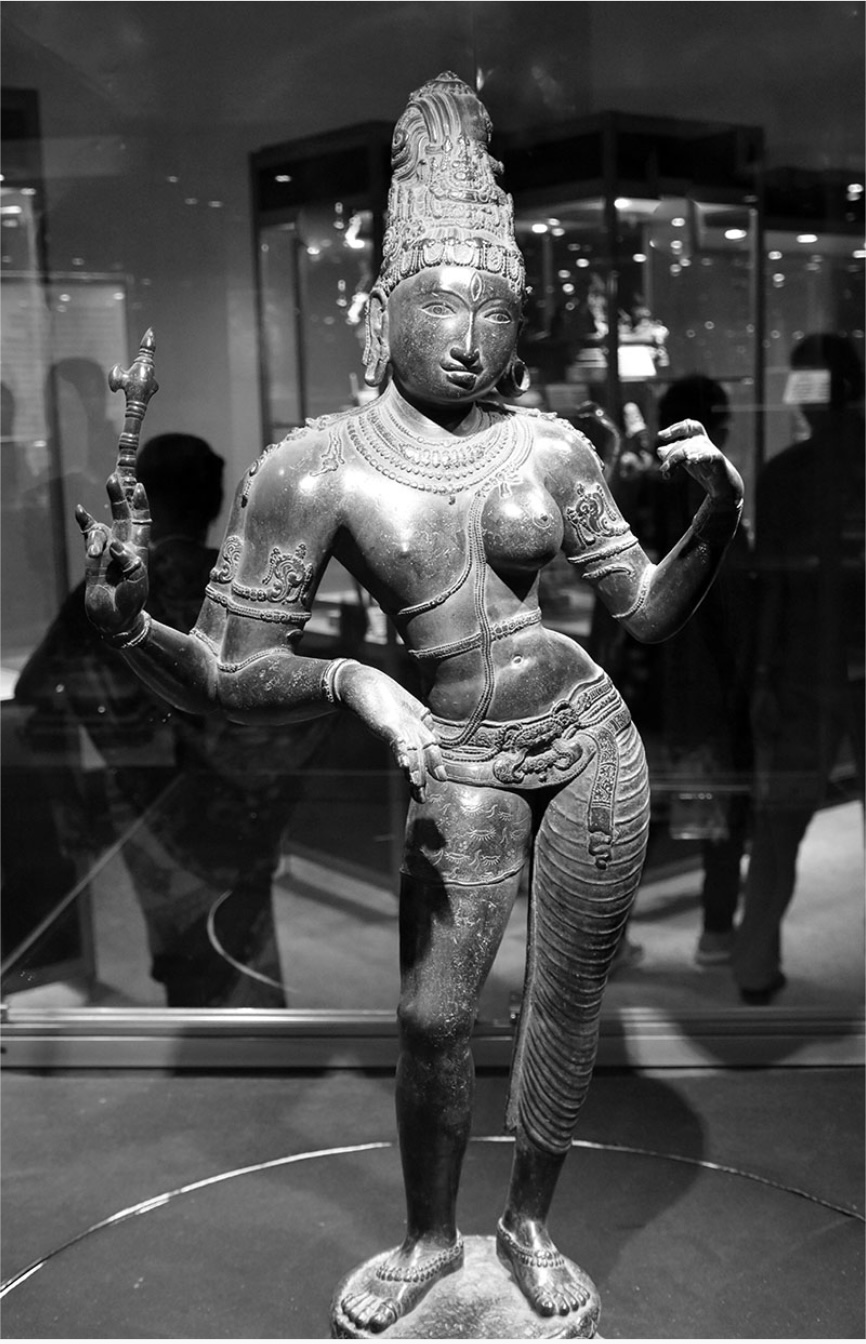
In terms of contemporary practice, a number of Indian dancers in In dia, in the UK and elsewhere are now attempting to re-inscribe and re-creat e artistic forms connected with traditional Indian forms of gender and sexu ality (devadasis, hijras, etc.) in a radically different context, such as in performance research, in cross-disciplinary theatrical productio ns, and in film and creative work. Investigating iconography that depicts c ertain original philosophic concepts of a balance between male and female ( ardhanarishvara), and particular stories of gender transformation in mythological depictions such as in the epic Mahabharata text as well as examples of deities worshipped by the trans community (Bahucha ra Mata) expose layered understandings of the spectrum of human sexual ity. These developments will form part of the new investigation. In this pr oject I investigate aspects of ‘asymmetrical relations of dependence’ (Hege wald, 2023:8) and issues of empowerment as well as erasures of memory broug ht about by nationalistic agendas.
Ann R David, PhD, Professor of Dance and Cultural Engagement, is Distinguished Professor Eme ritus at the University of Bonn, in the Institute of Oriental and Asian Stu dies. She has recently been a Visiting Professor at King’s College, London in the Culture, Media and Creative Industries (CMCI) department, and holds an Emerita professorial position at the University of Roehampton where she worked for 17 years, including 6 years as Head of the Dance Department. Her research and teaching specialisms are dance anthropology (ritual, migratio n, diaspora, embodiment) and South Asian classical & popular dance; her dance training includes ballet, contemporary, folk, and the Indian classic al styles of bharatanatyam and kathak. She has published widely on this wor k, as well as on dance in Bollywood and on the ritual dances of Tibetan Bud dhism and has completed a monograph of Indian dancer Ram Gopal, (Bloomsbury ). Ann has given public talks at the V&A, the British Library, British Museum and National Portrait Gallery and been involved in post-show discuss ions at Asia House, Nehru Centre, Sadler’s Wells, Southbank and the Bhavan, and has appeared on BBC radio and TV on several occasions. She is passiona te about the need for the arts in education, works closely with policy make rs, and is on the board of several arts organisations. Her current interest s are in creating cultures of (mutual) care in the arts that support an eco logical dimension.
X-ALT-DESC;FMTTYPE=text/html:
 Going beyond the usual concepts of dependency relationshi
ps located within a post-colonial state, this new research project examines
in greater depth how Indian conceptions of the body (depicted in art, icon
ography and in performance) have been impacted by a moral, religious Wester
n perspective imposed before, during and post-colonial rule. My recent focu
s on gay male dancer Ram Gopal, the subject of a recently published monogra
ph (2024), investigates a fascinating man who worked his way through a comp
lex tangle of critical contemporary problems as a gay Asian male dancer in
London and Europe at a time when myriad and relevant cultural shifts were i
n progress. Tackling issues of gender and coloniality, the book is a critic
al beginning to the new research.
Going beyond the usual concepts of dependency relationshi
ps located within a post-colonial state, this new research project examines
in greater depth how Indian conceptions of the body (depicted in art, icon
ography and in performance) have been impacted by a moral, religious Wester
n perspective imposed before, during and post-colonial rule. My recent focu
s on gay male dancer Ram Gopal, the subject of a recently published monogra
ph (2024), investigates a fascinating man who worked his way through a comp
lex tangle of critical contemporary problems as a gay Asian male dancer in
London and Europe at a time when myriad and relevant cultural shifts were i
n progress. Tackling issues of gender and coloniality, the book is a critic
al beginning to the new research.
The ‘moralising projects of colonia l and post-colonial modernity’ as Davesh Soneji has termed them remain part of the ‘unfinished pasts’ (2012: 3) of both the place and enactment of per formative ritual and performance in India, from the roles of the female tem ple dancers, the devadasi, through to the itinerant folk dance and theatrical performers, and the ‘third gender’ or transgender performers – the hirijas and kothis. In these cases, there is what I c all a ‘double dependency’ that emerges firstly from the all-powerful coloni al project and secondly, in the India that develops in post-colonial times from the new, fervent nationalism that reinforces in part, a Victorian mora lity and disgust for bodily performance, recreating the dance forms through a prism of purity and respectability. In complex ways, these systems creat ed cultures of dependency where aspects of inclusion and exclusion were nor mative ways of behaviour.
In terms of contemporary practice, a number of Indian dancers in India, in the UK and elsewhere are now attempting to re-inscribe and re-create artistic forms connected with traditional Indian forms of gender and sexuality (devadasis, hijras, etc.) in a radic ally different context, such as in performance research, in cross-disciplin ary theatrical productions, and in film and creative work. Investigating ic onography that depicts certain original philosophic concepts of a balance b etween male and female (ardhanarishvara), and particular stories o f gender transformation in mythological depictions such as in the epic Mahabharata text as well as examples of deities worshipped by the tran s community (Bahuchara Mata) expose layered understandings of the spectrum of human sexuality. These developments will form part of the new i nvestigation. In this project I investigate aspects of ‘asymmetrical relati ons of dependence’ (Hegewald, 2023:8) and issues of empowerment as well as erasures of memory brought about by nationalistic agendas.
An n R David, PhD, Professor of Dance and Cultural Engagement, is Dis tinguished Professor Emeritus at the University of Bonn, in the Institute o f Oriental and Asian Studies. She has recently been a Visiting Professor at King’s College, London in the Culture, Media and Creative Industries (CMCI ) department, and holds an Emerita professorial position at the University of Roehampton where she worked for 17 years, including 6 years as Head of t he Dance Department. Her research and teaching specialisms are dance anthro pology (ritual, migration, diaspora, embodiment) and South Asian classical & popular dance; her dance training includes ballet, contemporary, folk , and the Indian classical styles of bharatanatyam and kathak. She has publ ished widely on this work, as well as on dance in Bollywood and on the ritu al dances of Tibetan Buddhism and has completed a monograph of Indian dance r Ram Gopal, (Bloomsbury). Ann has given public talks at the V&A, the B ritish Library, British Museum and National Portrait Gallery and been invol ved in post-show discussions at Asia House, Nehru Centre, Sadler’s Wells, S outhbank and the Bhavan, and has appeared on BBC radio and TV on several oc casions. She is passionate about the need for the arts in education, works closely with policy makers, and is on the board of several arts organisatio ns. Her current interests are in creating cultures of (mutual) care in the arts that support an ecological dimension.
DTSTAMP:20261027T115930 DTSTART;TZID=Europe/Paris:20250203T101500 DTEND;TZID=Europe/Paris:20250203T121500 SEQUENCE:0 TRANSP:OPAQUE END:VEVENT END:VCALENDAR