BEGIN:VCALENDAR
VERSION:2.0
PRODID:-//jEvents 2.0 for Joomla//EN
CALSCALE:GREGORIAN
METHOD:PUBLISH
BEGIN:VTIMEZONE
TZID:Europe/Paris
BEGIN:STANDARD
DTSTART:20240323T153000
RDATE:20240331T030000
TZOFFSETFROM:+0200
TZOFFSETTO:+0100
TZNAME:Europe/Paris CET
END:STANDARD
BEGIN:STANDARD
DTSTART:20241027T020000
RDATE:20250330T030000
TZOFFSETFROM:+0200
TZOFFSETTO:+0100
TZNAME:Europe/Paris CET
END:STANDARD
BEGIN:STANDARD
DTSTART:20251026T020000
RDATE:20260329T030000
TZOFFSETFROM:+0200
TZOFFSETTO:+0100
TZNAME:Europe/Paris CET
END:STANDARD
BEGIN:STANDARD
DTSTART:20261025T020000
RDATE:20270328T030000
TZOFFSETFROM:+0200
TZOFFSETTO:+0100
TZNAME:Europe/Paris CET
END:STANDARD
BEGIN:STANDARD
DTSTART:20271031T020000
RDATE:20280326T030000
TZOFFSETFROM:+0200
TZOFFSETTO:+0100
TZNAME:Europe/Paris CET
END:STANDARD
BEGIN:DAYLIGHT
DTSTART:20240331T030000
RDATE:20241027T020000
TZOFFSETFROM:+0100
TZOFFSETTO:+0200
TZNAME:Europe/Paris CEST
END:DAYLIGHT
BEGIN:DAYLIGHT
DTSTART:20250330T030000
RDATE:20251026T020000
TZOFFSETFROM:+0100
TZOFFSETTO:+0200
TZNAME:Europe/Paris CEST
END:DAYLIGHT
BEGIN:DAYLIGHT
DTSTART:20260329T030000
RDATE:20261025T020000
TZOFFSETFROM:+0100
TZOFFSETTO:+0200
TZNAME:Europe/Paris CEST
END:DAYLIGHT
BEGIN:DAYLIGHT
DTSTART:20270328T030000
RDATE:20271031T020000
TZOFFSETFROM:+0100
TZOFFSETTO:+0200
TZNAME:Europe/Paris CEST
END:DAYLIGHT
END:VTIMEZONE
BEGIN:VEVENT
UID:6f3002f8c8a6f1c354557a8adb447e78
CATEGORIES:L'échangeur
CREATED:20250116T094718
SUMMARY:Malabar’s Creole Charlemagne: Chavittunatakam’s Challenges, and Some Methodological Responses - Pr Ananya Kabir (King's College London)
LOCATION:Lesc – salle 308F (3e étage) - 21\, allée de l’Université\, Nanterre\, \, 9
2000\, France
DESCRIPTION:Chavittunatakam (Malayalam, ‘the stamping drama’) is a performance genre as
sociated with the Latin Catholic community of coastal Kerala. It combines t
heatricality, declaimed singing, percussion, and spectacular costume with t
he vigorous footwork that gives it its Malayalam name. The linguistic, kine
tic, rhythmic, and musical elements of chavittunatakam draw on Southern Ind
ic expressive culture. Its subject matter, however, comprises hagiographic,
conversion, and crusading narratives developed during medieval European Ch
ristianity, most conspicuously ‘the matter of Charlemagne’ which includes t
he exploits of the emperor Charlemagne’s nephew Roland. These features sugg
est the genre’s formation through several scales of transcultural encounter
s and longue durée interactions between different groups of Europeans and l
ocals on the Malabar Coast since the advent of the Portuguese, commencing w
ith Vasco da Gama’s disembarkation here in 1498. Commonly acknowledged with
in Kerala today as a local ‘epic’ form with European influences, chavittuna
takam possesses low cultural capital compared to other performance genres s
uch as kathakali, kalaripattayu, theyyam, and margamkali. Its practitioners
struggle to capture spaces and resources for their art, despite the brisk
entrepreneurship in heritage economy that characterises postcolonial India.
Questions about visibility, patronage, marginalisation, and marketisation
join the complexities of studying chavittunatakam’s performative, literary
historical, linguistic, and philological dimensions. The challenges posed b
y those complexities have hindered systematic examination of chavittunataka
m. Based on my ongoing study of creolisation as a historical process in coa
stal India, and on recent fieldwork in Kerala, I analyse chavittunatakam as
a creolised performance genre to present some methodological responses to
these challenges.\n* Photo : Karalsman Charitham (‘The Deeds of Charlemagne
’), 28th December 2024, Gothuruth, Kerala. Photo credit: Gothuruth Sports a
nd Arts Club\nAnanya Jahanara Kabir FBA is Professor of English Literature
at King’s College London. Her research spans creolisation across the Atlant
ic and Indian Ocean worlds, critical philology, and the relationship betwee
n literary texts, performative cultural expression, and memory work. Profes
sor Kabir is the author of Paradise, Death and Doomsday in Anglo-Saxon Lite
rature (2002), Territory of Desire: Representing the Valley of Kashmir (200
9) and Partition’s Post-Amnesias: 1947, 1971, and Modern South Asia (2013).
During 2013-18, she directed the ERC Advanced Grant-funded project ‘Modern
Moves’, which explored the global popularity of African-heritage social da
nce; her monograph-in-progress, Alegropolitics, draws on that research. She
is Fellow of the British Academy, has been awarded India’s Infosys Prize i
n the Humanities and Germany’s Humboldt Research Prize, and is on the edito
rial team of the new Cambridge University Press journal, Public Humanities.
Her new research project is on Portuguese and Dutch interactions in fortif
ied coastal enclaves from Brazil to Japan.\n
X-ALT-DESC;FMTTYPE=text/html: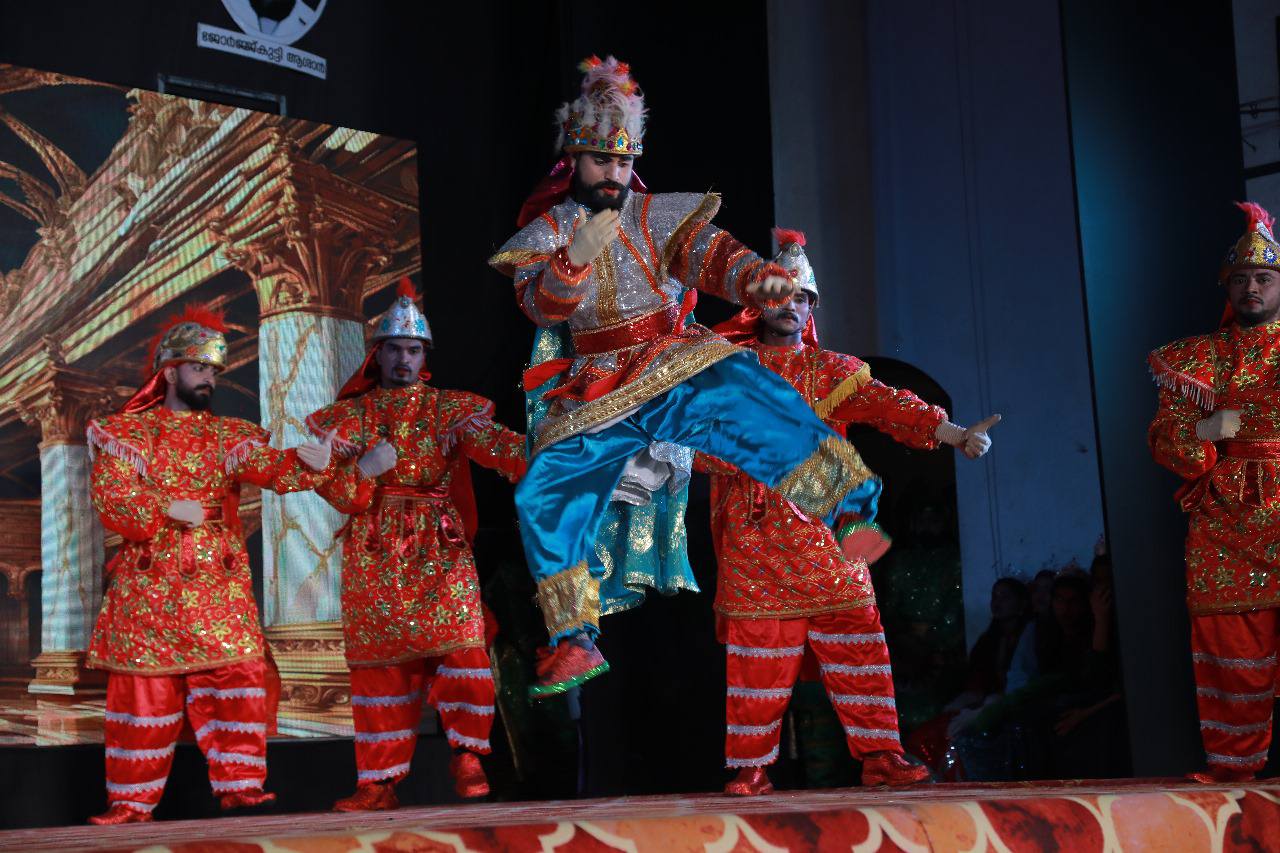 Chavittunatakam (Malayalam, ‘the stamping drama’)
is a performance genre associated with the Latin Catholic community of coas
tal Kerala. It combines theatricality, declaimed singing, percussion, and s
pectacular costume with the vigorous footwork that gives it its Malayalam n
ame. The linguistic, kinetic, rhythmic, and musical elements of chavittunat
akam draw on Southern Indic expressive culture. Its subject matter, however
, comprises hagiographic, conversion, and crusading narratives developed du
ring medieval European Christianity, most conspicuously ‘the matter of Char
lemagne’ which includes the exploits of the emperor Charlemagne’s nephew Ro
land. These features suggest the genre’s formation through several scales o
f transcultural encounters and longue durée interactions betw
een different groups of Europeans and locals on the Malabar Coast since the
advent of the Portuguese, commencing with Vasco da Gama’s disembarkation h
ere in 1498. Commonly acknowledged within Kerala today as a local ‘epic’ fo
rm with European influences, chavittunatakam possesses low cultural capital
compared to other performance genres such as kathakali, kalaripattayu, the
yyam, and margamkali. Its practitioners struggle to capture spaces and reso
urces for their art, despite the brisk entrepreneurship in heritage economy
that characterises postcolonial India. Questions about visibility, patrona
ge, marginalisation, and marketisation join the complexities of studying ch
avittunatakam’s performative, literary historical, linguistic, and philolog
ical dimensions. The challenges posed by those complexities have hindered s
ystematic examination of chavittunatakam. Based on my ongoing study of creo
lisation as a historical process in coastal India, and on recent fieldwork
in Kerala, I analyse chavittunatakam as a creolised performance genre to pr
esent some methodological responses to these challenges.
Chavittunatakam (Malayalam, ‘the stamping drama’)
is a performance genre associated with the Latin Catholic community of coas
tal Kerala. It combines theatricality, declaimed singing, percussion, and s
pectacular costume with the vigorous footwork that gives it its Malayalam n
ame. The linguistic, kinetic, rhythmic, and musical elements of chavittunat
akam draw on Southern Indic expressive culture. Its subject matter, however
, comprises hagiographic, conversion, and crusading narratives developed du
ring medieval European Christianity, most conspicuously ‘the matter of Char
lemagne’ which includes the exploits of the emperor Charlemagne’s nephew Ro
land. These features suggest the genre’s formation through several scales o
f transcultural encounters and longue durée interactions betw
een different groups of Europeans and locals on the Malabar Coast since the
advent of the Portuguese, commencing with Vasco da Gama’s disembarkation h
ere in 1498. Commonly acknowledged within Kerala today as a local ‘epic’ fo
rm with European influences, chavittunatakam possesses low cultural capital
compared to other performance genres such as kathakali, kalaripattayu, the
yyam, and margamkali. Its practitioners struggle to capture spaces and reso
urces for their art, despite the brisk entrepreneurship in heritage economy
that characterises postcolonial India. Questions about visibility, patrona
ge, marginalisation, and marketisation join the complexities of studying ch
avittunatakam’s performative, literary historical, linguistic, and philolog
ical dimensions. The challenges posed by those complexities have hindered s
ystematic examination of chavittunatakam. Based on my ongoing study of creo
lisation as a historical process in coastal India, and on recent fieldwork
in Kerala, I analyse chavittunatakam as a creolised performance genre to pr
esent some methodological responses to these challenges.
* Photo : Karalsman Charitham (‘The Deeds of Ch
arlemagne’), 28th December 2024, Gothuruth, Kerala. Photo credit: Gothuruth
Sports and Arts Club
Ananya Jahanara Kabir FBA is Professor of English Literature at King’s College London. Her re
search spans creolisation across the Atlantic and Indian Ocean worlds, crit
ical philology, and the relationship between literary texts, performative c
ultural expression, and memory work. Professor Kabir is the author of
Paradise, Death and Doomsday in Anglo-Saxon Literature (2002)
, Territory of Desire: Representing the Valley of Kashmir&nbs
p;(2009) and Partition’s Post-Amnesias: 1947, 1971, and Modern Sou
th Asia (2013). During 2013-18, she directed the ERC Advanced Gra
nt-funded project ‘Modern Moves’, which explored the global popularity of A
frican-heritage social dance; her monograph-in-progress, Alegropolitics<
/i>, draws on that research. She is Fellow of the British Academy, has been
awarded India’s Infosys Prize in the Humanities and Germany’s Humboldt Res
earch Prize, and is on the editorial team of the new Cambridge University P
ress journal, Public Humanities. Her new research project is
on Portuguese and Dutch interactions in fortified coastal enclaves from Bra
zil to Japan.
DTSTAMP:20261027T120738
DTSTART;TZID=Europe/Paris:20250324T153000
DTEND;TZID=Europe/Paris:20250324T173000
SEQUENCE:0
TRANSP:OPAQUE
END:VEVENT
END:VCALENDAR