BEGIN:VCALENDAR
VERSION:2.0
PRODID:-//jEvents 2.0 for Joomla//EN
CALSCALE:GREGORIAN
METHOD:PUBLISH
BEGIN:VTIMEZONE
TZID:Europe/Paris
BEGIN:STANDARD
DTSTART:20201125T153000
RDATE:20210328T030000
TZOFFSETFROM:+0200
TZOFFSETTO:+0100
TZNAME:Europe/Paris CET
END:STANDARD
BEGIN:STANDARD
DTSTART:20211031T020000
RDATE:20220327T030000
TZOFFSETFROM:+0200
TZOFFSETTO:+0100
TZNAME:Europe/Paris CET
END:STANDARD
BEGIN:STANDARD
DTSTART:20221030T020000
RDATE:20230326T030000
TZOFFSETFROM:+0200
TZOFFSETTO:+0100
TZNAME:Europe/Paris CET
END:STANDARD
BEGIN:STANDARD
DTSTART:20231029T020000
RDATE:20240331T030000
TZOFFSETFROM:+0200
TZOFFSETTO:+0100
TZNAME:Europe/Paris CET
END:STANDARD
BEGIN:STANDARD
DTSTART:20241027T020000
RDATE:20250330T030000
TZOFFSETFROM:+0200
TZOFFSETTO:+0100
TZNAME:Europe/Paris CET
END:STANDARD
BEGIN:STANDARD
DTSTART:20251026T020000
RDATE:20260329T030000
TZOFFSETFROM:+0200
TZOFFSETTO:+0100
TZNAME:Europe/Paris CET
END:STANDARD
BEGIN:STANDARD
DTSTART:20261025T020000
RDATE:20270328T030000
TZOFFSETFROM:+0200
TZOFFSETTO:+0100
TZNAME:Europe/Paris CET
END:STANDARD
BEGIN:STANDARD
DTSTART:20271031T020000
RDATE:20280326T030000
TZOFFSETFROM:+0200
TZOFFSETTO:+0100
TZNAME:Europe/Paris CET
END:STANDARD
BEGIN:DAYLIGHT
DTSTART:20210328T030000
RDATE:20211031T020000
TZOFFSETFROM:+0100
TZOFFSETTO:+0200
TZNAME:Europe/Paris CEST
END:DAYLIGHT
BEGIN:DAYLIGHT
DTSTART:20220327T030000
RDATE:20221030T020000
TZOFFSETFROM:+0100
TZOFFSETTO:+0200
TZNAME:Europe/Paris CEST
END:DAYLIGHT
BEGIN:DAYLIGHT
DTSTART:20230326T030000
RDATE:20231029T020000
TZOFFSETFROM:+0100
TZOFFSETTO:+0200
TZNAME:Europe/Paris CEST
END:DAYLIGHT
BEGIN:DAYLIGHT
DTSTART:20240331T030000
RDATE:20241027T020000
TZOFFSETFROM:+0100
TZOFFSETTO:+0200
TZNAME:Europe/Paris CEST
END:DAYLIGHT
BEGIN:DAYLIGHT
DTSTART:20250330T030000
RDATE:20251026T020000
TZOFFSETFROM:+0100
TZOFFSETTO:+0200
TZNAME:Europe/Paris CEST
END:DAYLIGHT
BEGIN:DAYLIGHT
DTSTART:20260329T030000
RDATE:20261025T020000
TZOFFSETFROM:+0100
TZOFFSETTO:+0200
TZNAME:Europe/Paris CEST
END:DAYLIGHT
BEGIN:DAYLIGHT
DTSTART:20270328T030000
RDATE:20271031T020000
TZOFFSETFROM:+0100
TZOFFSETTO:+0200
TZNAME:Europe/Paris CEST
END:DAYLIGHT
END:VTIMEZONE
BEGIN:VEVENT
UID:fa4cdada33511f49709e34c8b18362e4
CATEGORIES:Séminaire de l'EREA, EREA
CREATED:20210715T164529
SUMMARY:The Subversive Politics of Sentient Landscapes: Collective Ethics and Environmental Justice in Northern Peru, Ana Mariella Bacigalupo (Professor at SUNY Buffalo and NIAS-KNAW fellow)
LOCATION:Lesc – salle 308F (3e étage) - 21\, allée de l’Université\, Nanterre\, \, 9
2000\, France
DESCRIPTION:Poor mestizos in northern Peru respond to climate change and environmental
devastation by engaging indigenous sentient landscapes- with the capacity t
o sense, feel and act- as moral leaders of environmental movements and co-c
reators of an interethnic world. They challenge social models normalized by
neoliberal capitalism and settler colonialism, which are based on the dist
inction between the human and non-human, culture and nature, and which prom
ote human exceptionalism and environmental devastation. Scholars have consi
dered radically different forms of non-human persons and their multiple way
s of being in the world. This ethnography explores how local mestizos engag
e sentient landscapes ritually and politically to challenge governments and
industries as leaders in movements for environmental justice and collectiv
e ethics. By working beyond the theoretical limitations of both ontological
approaches (different was of being) and political ecology, and within the
realm of a local, place-based environmental and spiritual politics, my rese
arch shows how the historical dichotomies of Western thought and their effe
cts can be disrupted and displaced. I analyze how Peruvian mestizos’ engage
ment with sentient landscapes can provide a model for radical moral-environ
mental-political action. By defining “community” and “well-being” as humans
in relationship-to-places as-persons, poor mestizos resignify “nature” its
elf as an anchor for social justice.\nPlus d'informations sur ce projet de
recherche. (https://nias.knaw.nl/fellow/bacigalupo-ana-mariella/)\nPhoto :
Apu Cuculicote taken from the Moche ritual platform featuring the mesa of c
urandero Omballec, Taken by Ana Mariella Bacigalupo in 2019\n\n (mailto:ere
a.lesc.diffusion@gmail.com)\n
X-ALT-DESC;FMTTYPE=text/html: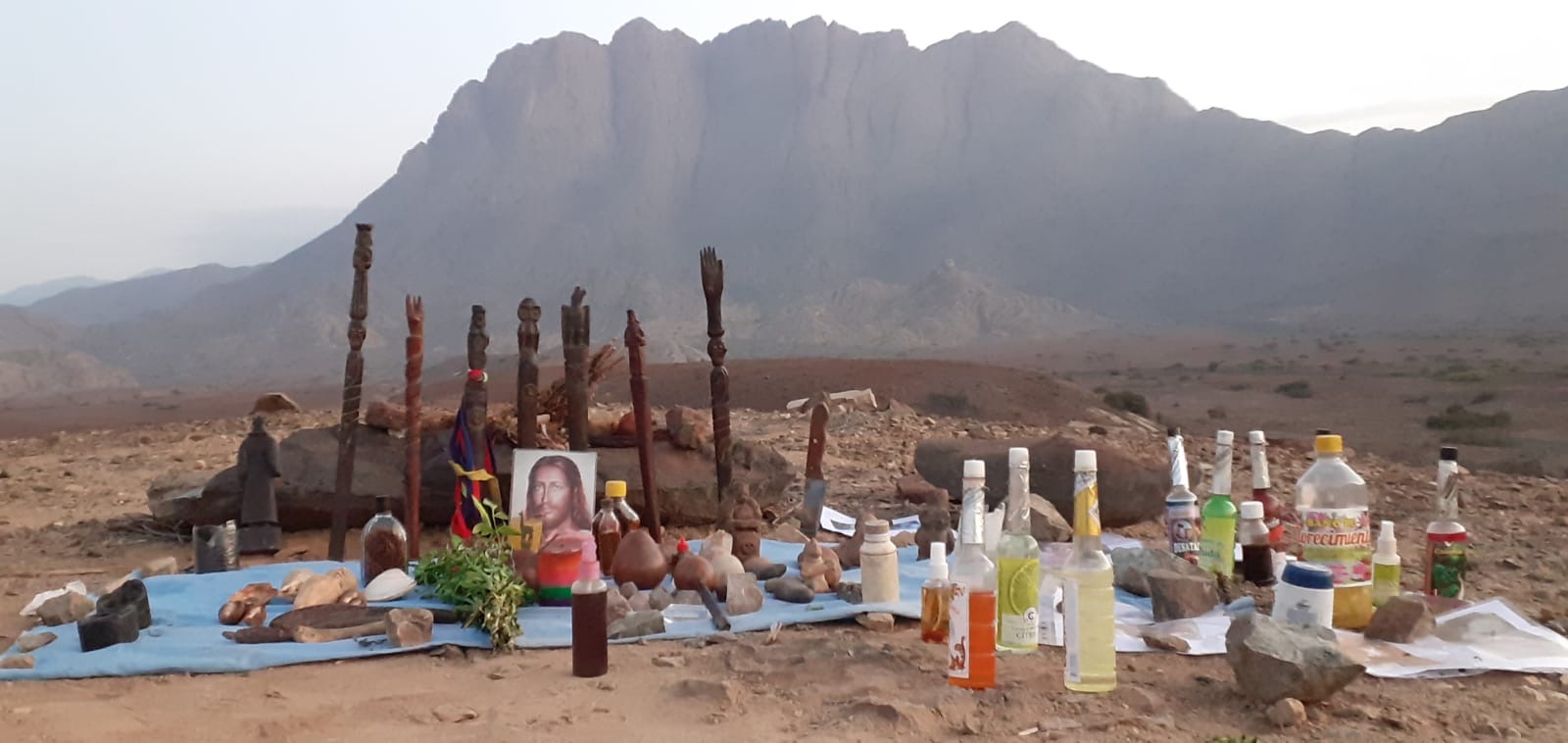 Poor mestizos in northern Peru respond to cl
imate change and environmental devastation by engaging indigenous sentient
landscapes- with the capacity to sense, feel and act- as moral leaders of e
nvironmental movements and co-creators of an interethnic world. They challe
nge social models normalized by neoliberal capitalism and settler coloniali
sm, which are based on the distinction between the human and non-human, cul
ture and nature, and which promote human exceptionalism and environmental d
evastation. Scholars have considered radically different forms of non-human
persons and their multiple ways of being in the world. This ethnography ex
plores how local mestizos engage sentient landscapes ritually and political
ly to challenge governments and industries as leaders in movements for envi
ronmental justice and collective ethics. By working beyond the theoretical
limitations of both ontological approaches (different was of being) and pol
itical ecology, and within the realm of a local, place-based environmental
and spiritual politics, my research shows how the historical dichotomies of
Western thought and their effects can be disrupted and displaced. I analyz
e how Peruvian mestizos’ engagement with sentient landscapes can provide a
model for radical moral-environmental-political action. By defining “commun
ity” and “well-being” as humans in relationship-to-places as-persons, poor
mestizos resignify “nature” itself as an anchor for social justice.
Poor mestizos in northern Peru respond to cl
imate change and environmental devastation by engaging indigenous sentient
landscapes- with the capacity to sense, feel and act- as moral leaders of e
nvironmental movements and co-creators of an interethnic world. They challe
nge social models normalized by neoliberal capitalism and settler coloniali
sm, which are based on the distinction between the human and non-human, cul
ture and nature, and which promote human exceptionalism and environmental d
evastation. Scholars have considered radically different forms of non-human
persons and their multiple ways of being in the world. This ethnography ex
plores how local mestizos engage sentient landscapes ritually and political
ly to challenge governments and industries as leaders in movements for envi
ronmental justice and collective ethics. By working beyond the theoretical
limitations of both ontological approaches (different was of being) and pol
itical ecology, and within the realm of a local, place-based environmental
and spiritual politics, my research shows how the historical dichotomies of
Western thought and their effects can be disrupted and displaced. I analyz
e how Peruvian mestizos’ engagement with sentient landscapes can provide a
model for radical moral-environmental-political action. By defining “commun
ity” and “well-being” as humans in relationship-to-places as-persons, poor
mestizos resignify “nature” itself as an anchor for social justice.
<
a href="https://nias.knaw.nl/fellow/bacigalupo-ana-mariella/">Plus d'inform
ations sur ce projet de recherche.
Photo :
Apu Cuculicote taken from the Moche ritual platform featuring the mesa of c
urandero Omballec, Taken by Ana Mariella Bacigalupo in 2019
DTSTAMP:20261027T114918
DTSTART;TZID=Europe/Paris:20211126T153000
DTEND;TZID=Europe/Paris:20211126T173000
SEQUENCE:0
TRANSP:OPAQUE
END:VEVENT
END:VCALENDAR